


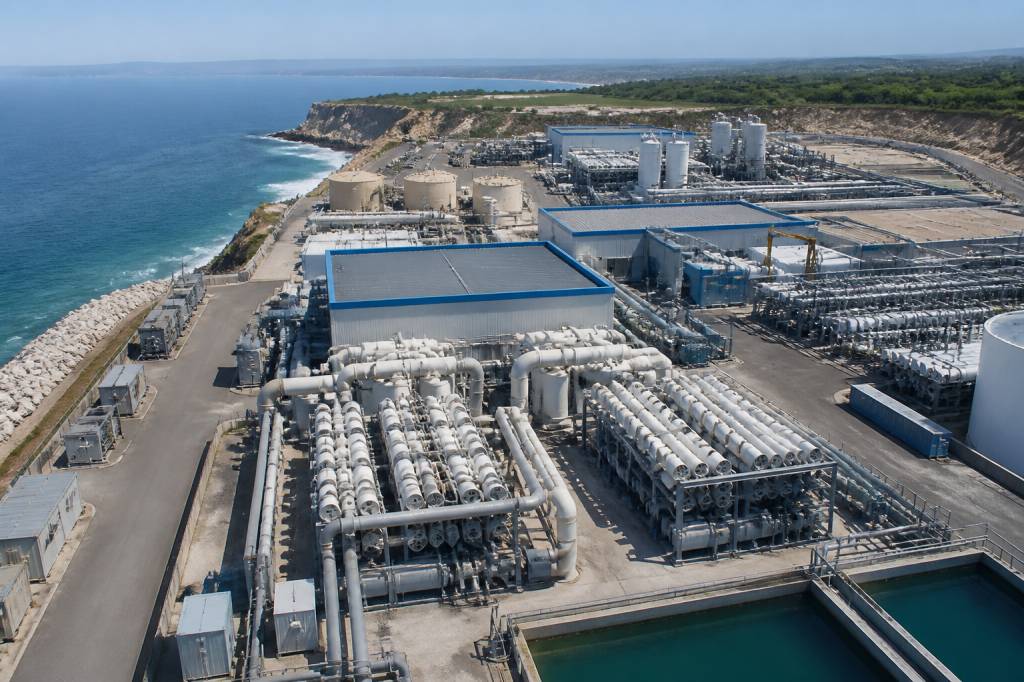
When the taps run low and the sky keeps its promises a little too selectively, coastal nations start looking seaward with fresh eyes. In the UK, where rain is part of the national identity yet water stress still appears in pockets of the country, desalination has moved from a niche idea to a serious piece of the water-security puzzle. It is not a silver bullet, and it never pretends to be one. But as climate variability intensifies, populations grow, and demand shifts like a tide across seasons, desalination is becoming harder to ignore.
The question is not simply whether the UK can desalinate seawater. It already can. The real question is how, where, and under what conditions this technology can support sustainable water management rather than become a costly detour with a heavy environmental wake.
Why desalination matters in the UK
At first glance, desalination in the UK may seem paradoxical. This is an island nation surrounded by water, after all. But oceans are not reservoirs of drinkable water; they are vast, saline, and energetically stubborn. Meanwhile, southern and eastern England regularly face the highest pressure on supply, especially during dry summers, heatwaves, and periods of high demand. Some regions depend on aquifers and river systems that can be strained when rainfall patterns shift. Others need a backup source that does not depend on a lucky sequence of wet months.
This is where desalination enters the stage. It can provide a drought-resilient supply, reducing reliance on rivers and groundwater at the moments when those sources are most vulnerable. For coastal communities, it can also act as a strategic buffer, especially where alternative transfers or new reservoirs are difficult to build or politically contested.
Of course, the sea has its own price tag. Desalination consumes energy, produces concentrated brine, and demands careful engineering. So in the UK, where climate targets are real and energy systems are under pressure, desalination must be assessed not only as a supply solution but as an environmental decision.
How seawater desalination works
In simple terms, desalination removes salts and other dissolved substances from seawater or brackish water to make it suitable for drinking or other uses. In the UK, the dominant technology is reverse osmosis, a process that pushes seawater through semi-permeable membranes under high pressure. Water molecules pass through; salts and many contaminants do not. The result is fresh water on one side and concentrated brine on the other.
This sounds elegant because it is. But the elegance hides the effort involved. Seawater is stubborn. It requires pretreatment to remove particles, biological material, and organic matter that could clog membranes. It needs significant pressure, which means significant electricity. And the membranes themselves must be monitored, cleaned, and eventually replaced.
Other technologies exist too, such as thermal desalination, electrodialysis, and newer hybrid systems, but for large-scale municipal supply in the UK, reverse osmosis remains the main player. It offers a strong balance of efficiency, scalability, and proven performance. The challenge is no longer whether the process works. The challenge is making it work with minimal ecological footprint.
Current desalination projects in the UK
The UK does not have dozens of desalination plants scattered along its coastline like a chain of pearls. Instead, it has a few notable facilities designed for specific supply pressures. The best-known example is the Thames Water desalination plant at Beckton in East London, one of the largest in Europe. It was built to provide a drought-resilient supply for the capital, especially during emergencies or extended dry periods.
Plants like Beckton illustrate the core role of desalination in the UK: not necessarily as everyday base-load supply, but as strategic capacity. They are there to keep the system stable when traditional sources wobble. Think of them as the emergency current in a river system—usually not the main flow, but vital when conditions change.
Across the country, utilities continue to explore resilience options: interconnections between water networks, leakage reduction, smarter demand management, and localized treatment solutions. Desalination is often one part of a broader portfolio rather than a standalone answer. That is a healthy sign. Sustainable water management rarely comes from one grand gesture; it emerges from layered, practical decisions.
Environmental impact: the hidden currents
Every water treatment technology leaves a footprint. Desalination’s main environmental concerns are energy use, greenhouse gas emissions, marine intake effects, and brine disposal. If these are not addressed carefully, the process can shift stress from one part of the water cycle to another.
The first issue is energy. Because reverse osmosis requires high pressure, desalination can be electricity-intensive. If that power comes from carbon-heavy sources, the environmental cost rises quickly. The good news is that energy efficiency has improved substantially, and the UK’s decarbonising electricity grid makes low-carbon desalination increasingly plausible. Pairing plants with renewables, grid flexibility, and operational planning can significantly reduce emissions.
The second issue is marine intake. Pulling seawater into a plant can affect plankton, fish larvae, and small organisms if intake systems are poorly designed. Modern facilities therefore use intake screens, lower intake velocities, and sometimes subsurface intakes where feasible. These are not glamorous details, but in environmental engineering, the small technical choices are often the ones that decide whether a solution is responsible or merely convenient.
The third issue is brine. Desalination turns one litre of seawater into a smaller quantity of fresh water and a more concentrated saline stream. If discharged carelessly, this brine can affect local salinity, temperature, and marine habitats. The key is dilution, dispersion, and smart outfall design. In sensitive areas, additional treatment or alternative discharge strategies may be needed.
So is desalination environmentally friendly? The honest answer is: it can be, but only with disciplined design and governance. A plant that ignores its brine or runs on carbon-intensive electricity is like a river diverted with no regard for the wetlands downstream. The water arrives, but the ecosystem pays the bill.
Making desalination more sustainable
The most promising desalination projects in the UK will be those that treat sustainability as a design principle, not a postscript. Several strategies are shaping this shift:
- Using high-efficiency reverse osmosis membranes to reduce energy demand.
- Recovering energy from the pressure of the outgoing brine stream.
- Powering plants with renewable electricity or low-carbon grid contracts.
- Designing intakes and outfalls to minimise harm to marine life.
- Integrating desalination with broader demand management and leakage reduction.
- Using desalination as a flexible, drought-resilient source rather than the default solution for all supply needs.
That last point matters a great deal. The greenest litre is often the one that never needs to be produced. Before expanding supply through energy-intensive treatment, utilities should keep pushing on conservation, pipe repair, customer efficiency, and water reuse. Desalination works best when it fills the gaps left after the less glamorous but more efficient measures have done their work.
There is also growing interest in coupling desalination with water reuse. In some systems, treated wastewater can help relieve pressure on freshwater sources, while desalination provides a coastal resilience option. Together, they create a more diversified water portfolio. Diversity, in water management as in ecology, tends to build resilience.
Desalination versus other water treatment technologies
Desalination is only one member of the water treatment family. In the UK, it competes and collaborates with technologies such as advanced filtration, ultraviolet disinfection, membrane bioreactors, and nutrient removal systems. Each serves a different purpose.
If a utility needs to remove pathogens from surface water, desalination is unnecessary. If the challenge is salinity intrusion in a coastal aquifer, however, it may be exactly the right tool. If the objective is to reuse wastewater for non-potable applications, advanced treatment and reuse may be more efficient than seawater desalination. The best choice depends on the source, the demand, the local ecology, and the long-term cost profile.
This is why water planning should never be driven by a fascination with technology alone. A shiny membrane or a powerful pump is not a policy. A sustainable system is built on fit-for-purpose solutions. Desalination belongs in the toolbox, but not in every case. A screwdriver is useful. It is not an ideal hammer.
The economics: paying for certainty
Desalination is often criticised for cost, and rightly so. It can be more expensive than conventional surface water abstraction or reservoir supply, especially when energy prices rise. Capital costs are high, operational costs are ongoing, and maintenance is non-negotiable. For utility planners, this means desalination is frequently justified by resilience value rather than by cheapest-unit-water economics.
That resilience value can be substantial. A city cannot always afford to calculate water security in pounds per cubic metre alone. What is the cost of supply failure during a drought? What is the cost of emergency restrictions, business disruption, or ecological damage from over-abstracted rivers? In that wider frame, desalination can be viewed as an insurance policy with a working pump.
Still, financial discipline matters. Plants must be sized carefully, used strategically, and integrated with broader demand reduction. Otherwise, a utility can end up paying for capacity that sits quietly in the corner like an overengineered lifeboat. Necessary? Yes. Cheap? Rarely.
What the UK can learn from global examples
Countries such as Israel, Spain, Saudi Arabia, and Australia have much larger desalination footprints than the UK. Their experience offers useful lessons. One lesson is that desalination becomes far more viable when paired with energy efficiency and renewable power. Another is that water policy must be integrated, not fragmented. A third is that public acceptance depends on transparency: people want to know where the water comes from, what it costs, and what happens to the brine.
Australia’s experience, in particular, shows the value of keeping desalination plants available as drought reserves while operating them sparingly during wetter periods. This flexible model may be relevant to the UK, where climate extremes can swing from flood to drought with unsettling speed. Infrastructure that can sleep lightly and wake quickly has a special value in a changing climate.
What sustainable water management looks like next
The future of desalination in the UK will likely be modest but meaningful. It is unlikely to replace conventional sources. It is more likely to sit alongside them, supporting a resilient network that includes reservoirs, groundwater, reuse, leakage control, catchment management, and smarter demand forecasting.
That broader approach matters because water systems are living systems. They are not just pipes and pumps; they are interwoven with rivers, soils, estuaries, energy grids, and communities. Treating desalination as one instrument in an orchestra is far wiser than asking it to play every part.
For water professionals, the key takeaway is simple: desalination can strengthen the UK’s water resilience, but only if it is deployed with ecological care, energy discipline, and strategic restraint. For readers, the takeaway is perhaps even simpler: the next time you turn on the tap on a hot July afternoon, remember that behind that ordinary stream may lie an intricate balance of rainfall, engineering, policy, and a quiet conversation with the sea.
In the end, desalination is not about conquering the ocean. It is about learning how to borrow from it without breaking the rhythm of the coast. That is a delicate art, and in the UK’s evolving water story, it may become an increasingly important one.