Fresh water is often treated like an endless gift until the taps run thinner, rivers shrink, and droughts start rewriting the rules of daily life. In that shifting landscape, desalination plants have moved from engineering curiosity to strategic infrastructure. They take one of the most abundant resources on Earth—seawater—and turn it into water fit for drinking, industry, and sometimes agriculture. The idea sounds almost alchemical, but the process is grounded in very practical science.
For coastal cities, islands, and water-stressed regions, desalination can feel like a lifeline drawn from the sea. Yet it is not a magic wand. These facilities are energy-intensive, technically demanding, and environmentally complex. To understand why they matter, it helps to look at how they work, what they solve, and what trade-offs still ripple through the story.
What a desalination plant actually does
At its core, a desalination plant removes dissolved salts and other impurities from seawater or brackish water. The goal is simple: produce fresh water where natural freshwater supplies are limited, unreliable, or already overused. The challenge is that saltwater is stubborn. It is not just “water with salt in it,” but a solution containing minerals, microorganisms, organic matter, and tiny particles that must be managed carefully.
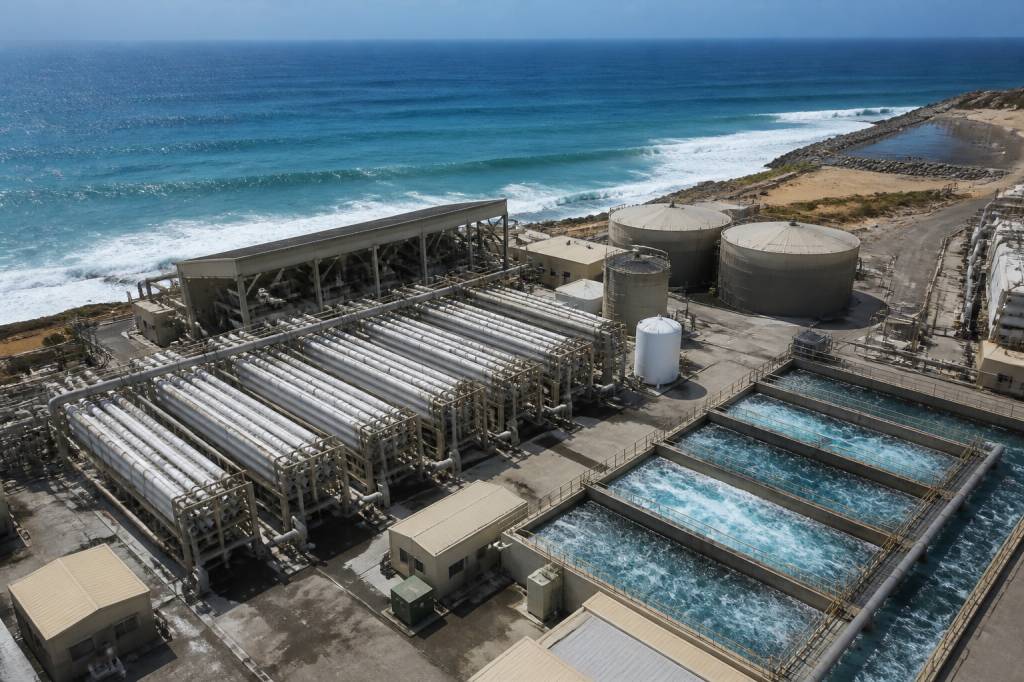
Most large modern plants use reverse osmosis, a technology that pushes seawater through specialized membranes. These membranes act like extraordinarily selective gates, allowing water molecules to pass while blocking most dissolved salts. The result is freshwater on one side and concentrated brine on the other. If that sounds elegant, it is—but elegance at scale requires serious engineering.
There are also thermal desalination methods, which use heat to evaporate water and then condense the vapor into fresh water. These systems are especially common in places with abundant energy resources or in industrial settings where waste heat is available. Each approach has its own strengths, limitations, and energy profile.
The main desalination technologies
Reverse osmosis dominates the global desalination market today because it is generally more energy-efficient than older thermal methods. Still, the broader family of desalination technologies is worth understanding.
- Reverse osmosis (RO): Seawater is pressurized and forced through semi-permeable membranes that remove salts and contaminants.
- Multi-stage flash distillation (MSF): Heated seawater is passed through multiple chambers at progressively lower pressure, causing rapid evaporation and condensation.
- Multi-effect distillation (MED): Similar to MSF, but designed to reuse heat more efficiently across several stages.
- Electrodialysis: Uses electric fields and ion-selective membranes to separate salts, often best suited to brackish water rather than full-strength seawater.
In practice, the best choice depends on local conditions: water salinity, energy costs, available infrastructure, climate, and the final use of the water. A plant in the Gulf region may look very different from one serving a Mediterranean island or an inland community with saline groundwater. Water engineering, like ecology, is rarely one-size-fits-all.
Inside a reverse osmosis plant
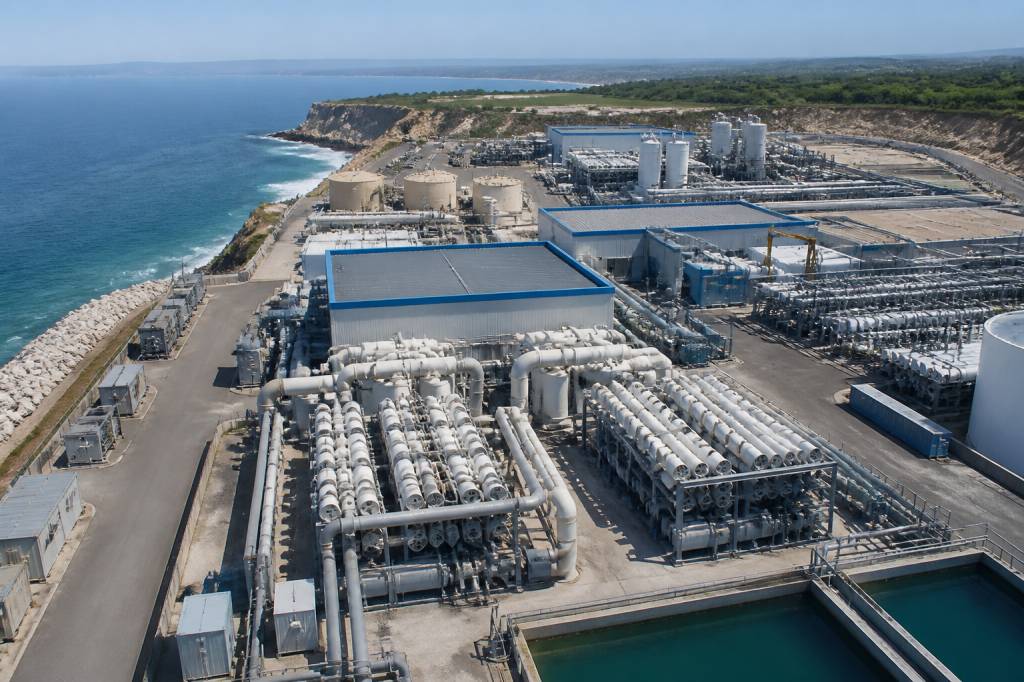
Reverse osmosis is the most common model, so let’s walk through the process step by step. Think of it as a carefully choreographed sequence, where each stage protects the next. A desalination plant is less like a single machine and more like a living system of pumps, filters, membranes, sensors, and recovery devices.
First, seawater is captured through an intake system. This may be an open-ocean intake or a subsurface intake that draws water through sand or seabed materials, which can naturally reduce some debris and organisms. The intake stage matters a great deal, because cleaner source water reduces operational problems later.
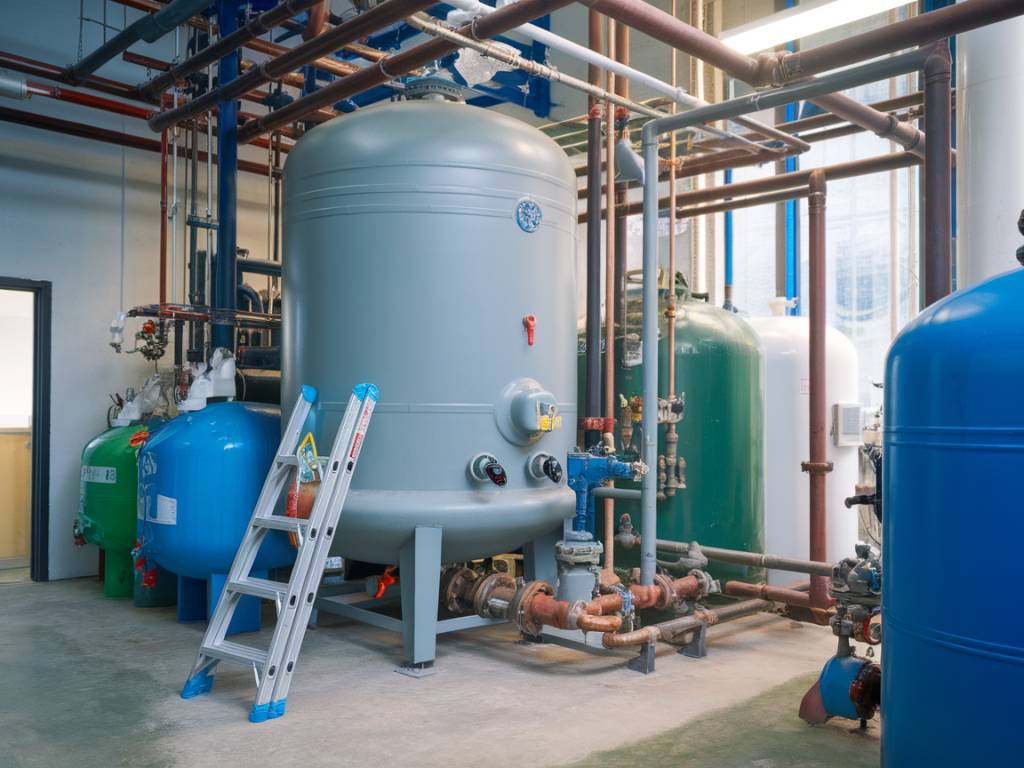
Next comes pre-treatment. This step removes suspended solids, algae, silt, and other particles that could clog the membranes. Depending on the plant, pre-treatment may include screening, coagulation, flotation, sand filtration, or advanced membrane filtration. It is not glamorous, but it is essential. Membranes are high-performance components, and like most high-performance equipment, they do not enjoy being choked with grime.
Then comes the heart of the system: high-pressure pumping. Seawater is pressurized to force it through the RO membranes. Because seawater naturally resists this move, the pressure must be high enough to overcome osmotic pressure, which is the natural tendency of water to move toward the saltier solution. This is the point where physics quietly demands a bill for its services.
As the water passes through the membranes, fresh water is separated from the concentrated brine. The freshwater is then treated further to balance mineral content, adjust pH, and ensure it is safe and pleasant to drink. This post-treatment step is important because desalinated water can be too “aggressive” chemically if left unadjusted. In other words, it may be clean, but not yet comfortable for pipes—or palates.
Finally, energy recovery devices capture pressure from the outgoing brine and transfer it to incoming seawater. This innovation has made modern desalination much more efficient than earlier generations of plants. Without it, the energy cost would be even steeper.
Why desalination plants matter now
The importance of desalination is tied to a very basic truth: water scarcity is becoming more common, more visible, and more politically sensitive. Climate change is disrupting rainfall patterns, glaciers are retreating, aquifers are being depleted, and growing urban populations are increasing demand. In some places, the traditional freshwater cycle is no longer enough to support existing needs.
Desalination offers a source of water that is not dependent on annual rainfall or river flows. That is a powerful advantage in drought-prone areas and in cities that have outgrown local supplies. For island nations and coastal regions, it can provide resilience when reservoirs fail and groundwater becomes too saline or polluted.
It also supports economic stability. Reliable water supply is essential for hospitals, food processing, tourism, data centers, semiconductor fabrication, and countless other sectors. When water is scarce, everything from public health to industrial output can suffer. In that sense, desalination is not just a water solution; it is infrastructure that underpins broader social and economic security.
Real-world examples of desalination in action
Some of the world’s largest desalination plants operate in the Middle East, where arid climates and fast-growing cities have made alternative water sources indispensable. Countries such as Saudi Arabia and the United Arab Emirates have invested heavily in desalination to support urban growth and reduce dependence on limited natural freshwater resources.
In Israel, desalination has become a cornerstone of national water planning. Large coastal facilities supply a substantial share of the country’s municipal water, helping buffer drought years and freeing up freshwater for agriculture and ecosystems. It is a striking example of how technology can reshape a nation’s water strategy when scarcity becomes the norm rather than the exception.
Australia also expanded desalination capacity after severe droughts stressed reservoirs and rivers. During those years, desalination was seen not as a replacement for conservation, but as one layer in a wider portfolio that included water efficiency, recycling, and demand management. That is perhaps the healthiest way to think about it: desalination works best when it is part of a diversified water system.
The environmental trade-offs we cannot ignore
Every desalination plant carries an environmental footprint, and pretending otherwise would be like describing a river only by its surface sparkle. The most significant concerns are energy use, greenhouse gas emissions, and brine disposal.
Because desalination—especially seawater reverse osmosis—requires substantial power, the climate impact depends heavily on the energy source. A plant powered by fossil fuels can generate significant emissions. A plant paired with renewables or low-carbon electricity has a much smaller footprint. This is why the future of desalination is inseparable from the future of clean energy.
Then there is brine, the salty concentrate left after freshwater extraction. This brine is denser than seawater and can contain residual treatment chemicals. If discharged carelessly, it may affect marine ecosystems by increasing salinity near the outfall and stressing local flora and fauna. With proper dilution, dispersion systems, and monitoring, the impact can be reduced, but it remains a central environmental concern.
Marine life can also be affected at the intake stage. Fish larvae, plankton, and small organisms may be drawn into the system or harmed by pressure changes. Better intake designs, slower intake velocities, and subsurface intakes can help reduce these risks. In desalination, as in ecology, design choices matter deeply.
How the industry is getting cleaner and smarter
The good news is that desalination technology is evolving quickly. Membranes are becoming more efficient and more resistant to fouling, which means plants can use less energy and require less maintenance. Energy recovery systems continue to improve, and digital controls allow operators to fine-tune performance in real time.
Some plants are integrating renewable energy sources such as solar and wind. Others are experimenting with hybrid systems that combine desalination with wastewater reuse, so that every drop is used with greater intention. There is also growing interest in zero-liquid-discharge approaches and brine valorization, where salts and minerals in the concentrate are recovered rather than simply released. That is a promising direction, though not yet a universal solution.
Another important trend is smarter site selection. Instead of building enormous centralized plants everywhere, planners are increasingly considering whether smaller, modular facilities could reduce environmental pressure and improve resilience. This more flexible model can be especially useful for remote communities or regions with seasonal demand spikes.
Where desalination fits in sustainable water management
Desalination is most useful when it complements, rather than replaces, other water strategies. The most sustainable water systems usually combine multiple approaches: conservation, leak reduction, water reuse, rainwater harvesting, aquifer recharge, watershed protection, and efficient irrigation. Desalination can then serve as a dependable backup or supply source when natural systems are under strain.
This layered approach is crucial because the cheapest and cleanest water is often the water you do not have to produce at all. Fixing distribution losses, upgrading irrigation, reusing treated wastewater, and protecting source water can sometimes yield larger benefits than building new supply infrastructure. Still, in some regions, no amount of efficiency can fully close the gap. That is where desalination becomes not merely useful, but necessary.
The real question is not whether desalination is perfect. It is whether the technology can be deployed responsibly, with careful attention to energy, ecology, cost, and equity. In a warming world, that question will become more urgent, not less.
What to watch for in the next decade
As water stress intensifies, desalination will likely expand, but not in the same form everywhere. Expect more plants powered by renewable energy, more emphasis on membrane innovation, and more sophisticated brine management. Expect also tougher public scrutiny, because communities are increasingly asking not only “Does it work?” but “At what cost, and for whom?”
The most successful desalination projects will be those that think like ecosystems: adaptive, interconnected, and efficient with resources. In that sense, the future of desalination may depend less on brute force and more on precision. The sea will always be there. The challenge is learning how to work with it without turning one problem into another.
Desalination plants matter because they turn ocean water into a buffer against scarcity. They are technological harbors in an increasingly uncertain hydrological climate. And while they cannot replace rivers, wetlands, or responsible water use, they can help societies navigate the dry stretches between rainstorms, one carefully filtered drop at a time.