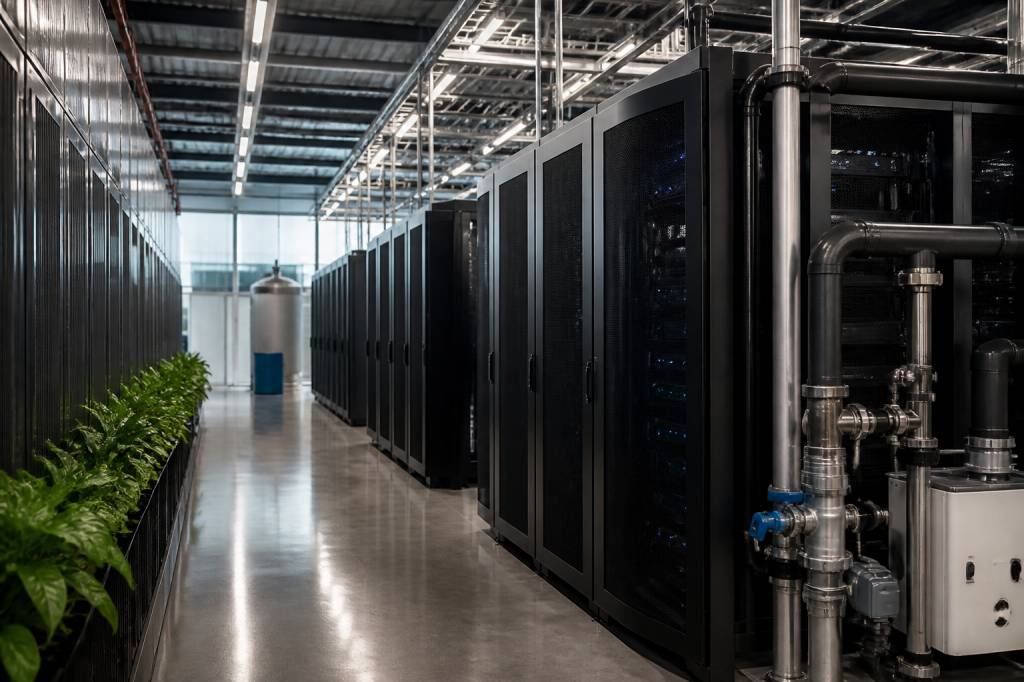
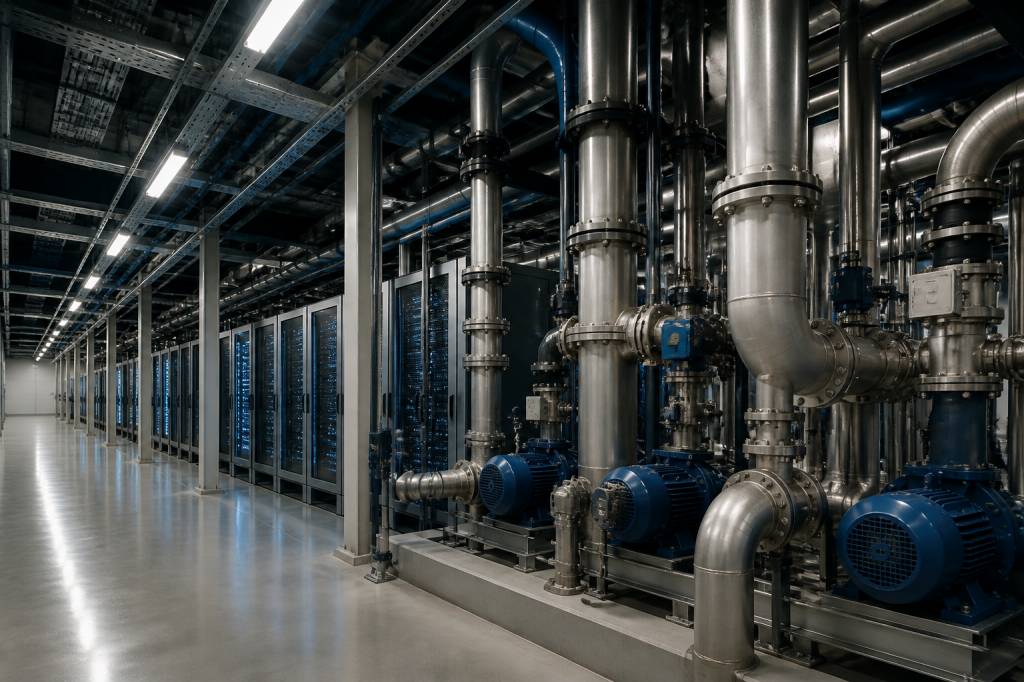
When people talk about artificial intelligence, the conversation usually drifts toward chips, model sizes, and energy bills. Water rarely makes the first page. Yet behind every chatbot reply and every image generated in seconds, there is often a hidden current: water flowing through data center cooling systems, helping keep thousands of servers from overheating like stones under a summer sun.
So, how much water does AI use per day in data centers? The honest answer is: it depends, a lot. There is no single universal number, because water use varies by data center size, climate, cooling technology, server density, and whether the facility is running ordinary cloud workloads or power-hungry AI training jobs. Still, we can map the landscape with useful estimates and real-world context.
Why data centers need water at all
Servers are just very fast, very obedient heat generators. The more computation they perform, the more heat they release. AI workloads, especially large model training and high-volume inference, can push hardware harder than traditional workloads. To prevent overheating, data centers rely on cooling systems, and many of those systems use water either directly or indirectly.
Water in data centers is typically used in three main ways:
- Evaporative cooling systems, where water absorbs heat and evaporates.
- Cooling towers, which remove heat from equipment by transferring it to water and then to the air.
- Indirect cooling loops, where water helps move heat away from servers without touching them directly.
In hotter climates, water can be especially attractive because it is an efficient heat carrier. But that efficiency comes with a trade-off: every drop used for cooling is a drop that must be sourced, treated, transported, and sometimes discharged. In water-stressed regions, this matters enormously.
How much water a data center can use in a day
A small data center may use relatively little water, especially if it relies on air cooling or closed-loop systems. A large hyperscale data center, however, can consume substantial volumes. Daily water use can range from tens of thousands of gallons to several million gallons per day, depending on the facility and conditions.
To make that less abstract, here are some rough benchmarks:
- Small enterprise facility: often low water use, sometimes near zero on-site if it uses mostly air cooling.
- Medium data center: tens of thousands to a few hundred thousand gallons per day in some cooling configurations.
- Large hyperscale facility: hundreds of thousands to millions of gallons per day, especially in hot, dry regions.
That sounds enormous, and sometimes it is. But the number alone can be misleading. A data center in a cool climate with efficient design may use far less water than one in a desert city with aggressive evaporative cooling. Like a river changing shape around stones, the same computational load can create very different water footprints depending on the terrain.
Where AI changes the picture
Not all data center workloads are equal. Traditional web hosting, email, and storage are demanding, but AI can be especially water-intensive for two reasons: compute density and cooling intensity.
Training a large language model may require thousands of GPUs running at high utilization for days or weeks. More heat means more cooling. Once deployed, AI systems also drive ongoing inference loads, sometimes at scale, which keeps servers working harder throughout the day.
AI therefore affects water use in two ways:
- It increases the amount of heat that cooling systems must remove.
- It can accelerate the expansion of data center infrastructure, multiplying water demand across new facilities.
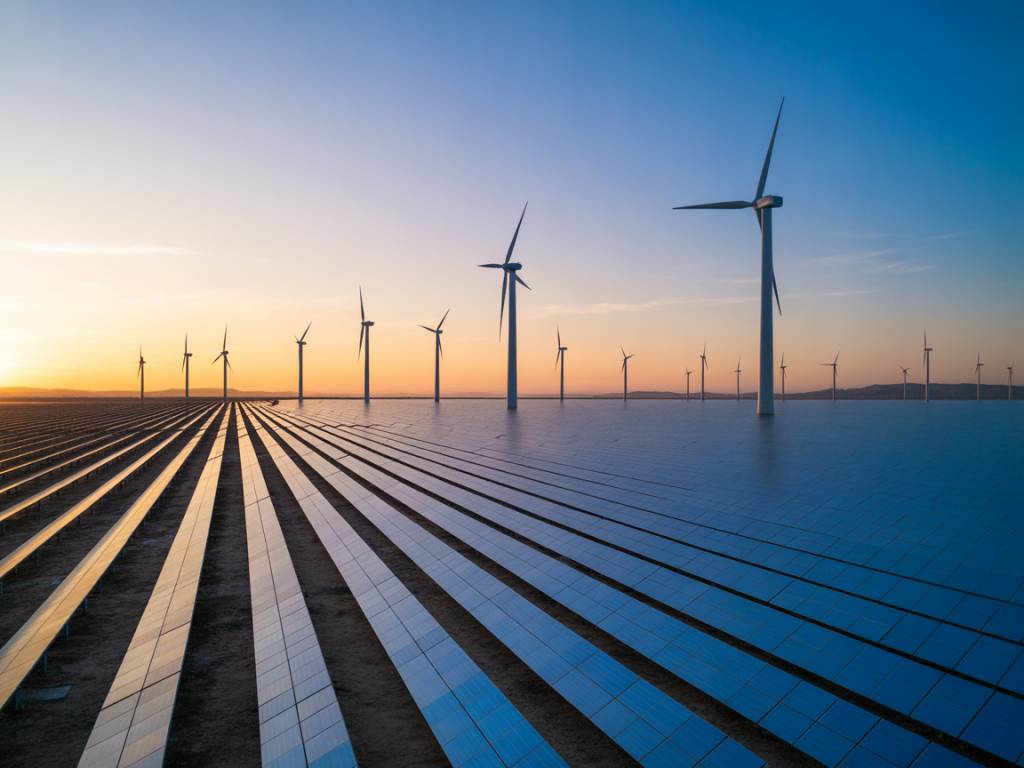
Some industry estimates suggest that AI can indirectly require significant water for every kilowatt-hour of electricity consumed, especially when the electricity is generated in water-intensive power plants. In other words, the water footprint of AI does not stop at the data center wall. It can extend upstream into the energy system.
A practical way to estimate daily water use
Instead of asking, “How much water does AI use?” it can be more useful to ask, “How much water does this particular facility use per unit of computing?” That is where metrics like Water Usage Effectiveness, or WUE, come into play.
WUE measures how many liters of water a data center uses per kilowatt-hour of IT energy consumed. A lower WUE means better water efficiency. The metric is helpful, but it still does not tell the full story. A facility with a low WUE may still consume a large total volume if it runs huge AI workloads.
Here is a simplified example:
- A data center using 10 megawatts of IT power over 24 hours consumes 240 megawatt-hours of IT energy in a day.
- If its WUE is 1.8 liters per kWh, that would equal about 432,000 liters of water per day.
- That is roughly 114,000 gallons in a single day.
Now scale that up to a much larger facility, or one operating in a hotter climate with more evaporative cooling, and the number climbs quickly. This is why daily water consumption can swing from modest to massive without any change in the AI model itself.
Direct water use versus indirect water use
One of the biggest misunderstandings about AI water use is that people often focus only on water physically entering the data center. Yet the indirect water use tied to electricity generation can be just as important, sometimes more so.
Direct water use includes:
- Cooling tower make-up water
- Evaporative cooling losses
- Humidification in certain facility designs
Indirect water use includes:
- Water used at power plants generating electricity for the data center
- Water embedded in fuel extraction and processing
- Water used in the manufacturing of servers, chips, and cooling infrastructure
So if someone says, “This AI system uses X gallons of water per day,” the more accurate question is: does X include only what flows through the cooling loop, or does it also include the larger watershed of electricity and hardware production? The answer can change the story dramatically.
Climate matters more than people think
Data centers do not exist in a vacuum. A facility in Dublin, Seattle, or Stockholm has a very different cooling burden than one in Arizona, Texas, or parts of the Middle East. In dry, hot regions, evaporative cooling is often effective but water-hungry. In cooler climates, free-air cooling or hybrid systems may reduce direct water use significantly.
That said, colder is not automatically better. In some locations, using more electricity for mechanical cooling may lower water use but raise carbon emissions. It is a classic environmental balancing act: save water here, spend more energy there. Like managing a watershed, every intervention shifts pressure somewhere else.
This is why sustainable data center design increasingly aims for system-level efficiency rather than a single “best” metric. The ideal solution depends on local water availability, grid mix, seasonal temperatures, and the intended workload.
Real-world examples and public pressure
As AI adoption has accelerated, data centers have faced growing scrutiny over resource use. In some communities, residents have raised concerns when large facilities are built in areas already struggling with drought or groundwater depletion. These concerns are not theoretical. They are about competing needs: farms, households, ecosystems, and digital infrastructure all drawing from the same limited resource.
Several technology companies have started publishing water stewardship goals and efficiency metrics, but disclosure remains uneven. Some facilities report annual water withdrawals; others provide only broad sustainability summaries. Without transparent reporting, it is difficult for regulators, researchers, and the public to assess whether AI growth is becoming more water-efficient or simply more water-intensive in a less visible way.
And visibility matters. Water is often out of sight in pipes, chillers, and condensers. Yet like an underground spring, its influence is everywhere.
What makes some AI facilities more water-efficient
Not all AI data centers are water pigs. Many operators are investing in smarter cooling and site design to reduce consumption. The best performers tend to combine several strategies:
- Using advanced liquid cooling close to the chips, which can reduce the need for large-scale air handling.
- Reusing non-potable water, such as treated wastewater or recycled industrial water.
- Designing facilities for cooler climates or seasonal temperature advantages.
- Improving server efficiency so less energy is wasted as heat.
- Running workloads to avoid peak temperature periods when possible.
Some systems even capture and reuse waste heat for nearby buildings or district heating networks. That does not erase the water footprint, but it can improve the overall environmental balance. In the best case, the facility becomes less like a draining pump and more like a well-tuned ecosystem, where one process feeds another.
Can AI help reduce water use too?
Yes, and this is where the story gets more interesting. AI is not only a source of water demand; it can also be part of the solution. The same technology that powers chatbots and image generators can optimize irrigation schedules, detect leaks in municipal networks, improve wastewater treatment, and forecast drought conditions more accurately.
In water management, AI can help:
- Predict equipment failures before leaks occur.
- Optimize pump operations in treatment plants.
- Improve irrigation timing based on soil and weather data.
- Detect anomalies in distribution systems using real-time analytics.
So the question is not whether AI is good or bad for water. It is whether we design and deploy it responsibly. A tool can be both part of the pressure and part of the remedy, depending on how it is used.
What readers should watch for
If you want to evaluate the water impact of AI and data centers, focus on a few signals rather than one flashy number.
- Is the facility reporting both direct and indirect water use?
- Does it use potable water, recycled water, or reclaimed wastewater?
- What is the local climate and water stress level?
- Are cooling systems optimized for efficiency, or simply for capacity?
- Is the company disclosing water usage per unit of computation, not just total annual use?
These questions help separate genuine progress from greenwashing. A low headline number can hide a thirsty system if the facility is huge, located in a stressed basin, or powered by water-intensive electricity.
So, how much water does AI use per day in data centers?
For a single AI application, the daily number is hard to pin down because it depends on where and how the AI runs. For a data center hosting AI workloads, the total can range from relatively small amounts to several million gallons per day. A large, cooling-intensive facility in a hot climate can use enough water daily to serve a small town.
The key takeaway is not just the number itself, but the direction of travel. As AI grows, the pressure on water systems may increase unless operators keep improving cooling efficiency, shifting to recycled water, and choosing sites with care. The future of digital infrastructure should not be written only in megawatts. It should also be measured in liters, watersheds, and the resilience of the rivers and aquifers we all depend on.
AI may feel weightless on the screen, but its footprint is rooted in very real places. Somewhere beyond the glowing rack lights, water is moving through pipes, towers, and treatment systems, doing the quiet work of keeping the digital world alive. The challenge now is to make sure that work remains sustainable, transparent, and in harmony with the landscapes that supply it.