In a country famous for rain, the idea of desalination may sound a little like carrying an umbrella into the North Sea and calling it strategy. And yet, in the UK, desalination has become a serious part of the water security conversation. Why? Because rainfall alone does not guarantee resilience. Droughts happen, demand rises, rivers feel the pressure, and climate change keeps rewriting the flow chart. When freshwater sources tighten like a riverbed in late summer, turning seawater into drinking water can become a practical safety net.
But how exactly does a desalination plant in the UK work? What does it cost to run such a facility, and what happens to the marine environment when we pull freshwater from the sea and leave the salt behind? Let’s follow the current, from intake to tap.
Why the UK needs desalination at all
At first glance, the UK may not seem like a desalination candidate. It has rivers, reservoirs, aquifers, and a famously wet reputation. But water supply is not just about annual rainfall; it is about where the water falls, when it falls, and whether the infrastructure can store and move it efficiently.
Southern England is especially vulnerable. Population density is high, demand is high, and some catchments are under real stress during dry spells. A long, hot summer can push reservoir levels down, reduce river flows, and strain groundwater resources. In those moments, desalination acts like an emergency valve in the system.
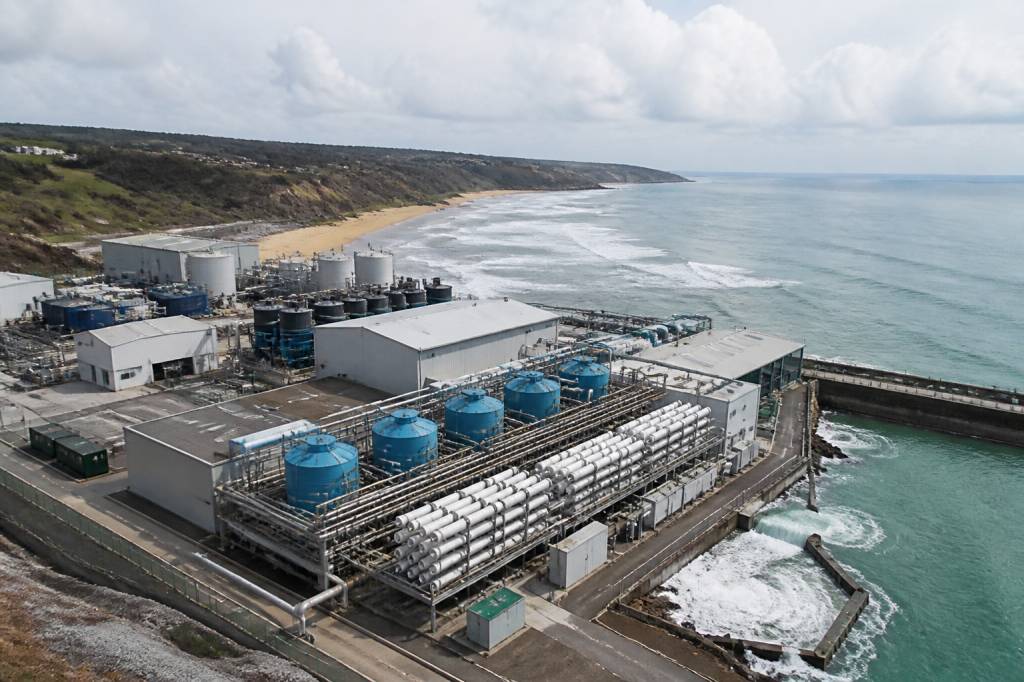
The best-known example is the Thames Water Desalination Plant in Beckton, East London, the UK’s only large-scale seawater desalination facility. It was built to help secure supply for millions of people during drought conditions, when the usual sources are no longer enough. It is not designed to run constantly like a factory line producing water day and night. Instead, it is more of a reserve instrument, ready to play when the weather and demand compose a difficult score.
How a desalination plant works
Most modern desalination plants in the UK use reverse osmosis, a technology that sounds technical because it is, but the principle is surprisingly intuitive.
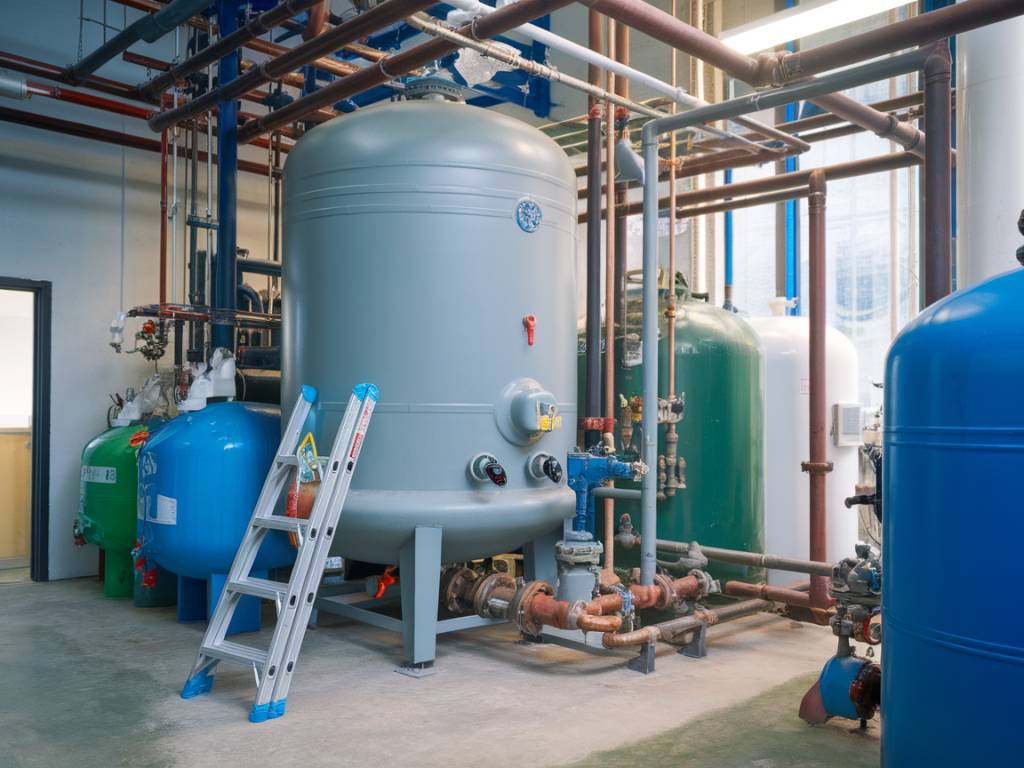
Seawater is collected from the coast and pre-treated to remove sand, algae, organic matter, and other particles that would clog the system. This is an important step, because seawater is not just “water with salt.” It is a busy liquid ecosystem carrying sediment, microorganisms, and dissolved compounds. Pretreatment protects the membranes and improves efficiency.
Then comes the heart of the process: high-pressure pumps force the water through semi-permeable membranes. These membranes act like extremely selective gates. Water molecules pass through, while salt and most impurities are left behind. That is reverse osmosis in action: instead of letting nature move from low salt to high salt, we apply pressure to push water the other way.
The result is freshwater on one side and concentrated brine on the other.
After filtration, the desalinated water is not yet ready to drink. It is usually remineralised, because pure water is not ideal for distribution or taste. Minerals such as calcium are added back to stabilize the water and make it less corrosive to pipes. Then it is disinfected and sent into the supply network.
In practical terms, the sequence looks like this:
- Seawater intake from the coast
- Screening and pretreatment to remove debris and particles
- High-pressure reverse osmosis filtration
- Brine separation and discharge
- Remineralisation and final disinfection
- Distribution into the public water supply
It is elegant engineering, but it is not magic. The process is energy-intensive, and that matters a great deal when we talk about cost and environmental impact.
What a UK desalination plant costs
Costs are usually discussed in two layers: capital expenditure and operating expenditure. In plain terms, that means the cost to build the plant and the cost to keep it running.
Building a large desalination plant is expensive. The UK’s Beckton facility reportedly cost hundreds of millions of pounds to construct. That price reflects the plant itself, the pumping infrastructure, the treatment systems, and the engineering required to connect it to the water network. Coastal intake structures, power supply upgrades, and brine discharge systems all add to the bill.
Then comes the operating cost, which can be even more important over time. Desalination uses significant electricity, mainly for the high-pressure pumps. Energy prices therefore have a direct effect on the cost per cubic metre of water produced. Membrane replacement, maintenance, chemical pretreatment, skilled labor, and monitoring systems all add further expense.
So, how much does desalinated water cost? The answer depends on the facility, energy prices, seawater quality, and how often the plant runs. In general, desalinated water is more expensive than water from rivers or reservoirs. That is why desalination is rarely the first choice for everyday supply if other sources are available. It is better understood as insurance: costly, yes, but invaluable when the alternatives are running dry.
There is also a hidden economic factor: resilience. If a city avoids water restrictions, industrial disruptions, and emergency tanker deliveries during drought, the desalination plant may save money indirectly. In other words, the price of water is not only written on the utility bill; sometimes it is written in avoided crisis.
The environmental impact: the full ledger
Desalination sits at an interesting crossroads. It can relieve pressure on rivers and aquifers, which is a genuine environmental benefit. But it can also create new impacts if it is not carefully designed and managed. Like any powerful tool, it asks to be used with discipline.
The first major issue is energy use. If the electricity comes from fossil fuels, desalination can have a substantial carbon footprint. That matters in a world trying to decarbonise water systems as well as transport and industry. A desalination plant powered by renewable energy has a very different environmental profile from one fed by a carbon-heavy grid.
Then there is brine discharge. The leftover concentrate contains much higher salt levels than seawater, along with traces of treatment chemicals. If released carelessly, it can affect local marine ecosystems by increasing salinity near the discharge point and stressing sensitive organisms on the seafloor. This is especially important in semi-enclosed or slow-flushing coastal areas.
However, modern plants are not blind to this risk. Brine is often diluted before discharge, and outlets are engineered to improve mixing with surrounding seawater. Environmental assessments are typically required to understand the likely effects on marine life, water circulation, and habitats.
Another concern is intake impacts. Drawing seawater into the plant can trap or injure small marine organisms, including plankton, larvae, and fish. Good intake design, lower intake velocities, and screening systems can reduce this risk. In environmental engineering, the goal is not just to take water; it is to take it gently.
There are also land-use and visual impacts, especially when plants are built near coasts or urban edges. These are usually smaller than the marine and energy issues, but they still matter when local communities evaluate a project.
How the UK manages these risks
The UK’s approach to desalination has been cautious. That is sensible. A plant like Beckton is not meant to replace conventional water resources; it is meant to complement them. Water companies typically deploy desalination as part of a broader resilience strategy that includes leakage reduction, reservoir management, demand reduction, and water reuse.
That last point is increasingly important. In many cases, the greenest litre is the one you do not need to produce at all. Fixing leaks, encouraging efficient fixtures, reducing garden waste, and rethinking industrial water use can delay or reduce the need for expensive treatment infrastructure.
When desalination is used, environmental monitoring becomes essential. Operators may track marine conditions near discharge zones, membrane efficiency, chemical use, and energy consumption. Good governance does not eliminate impact, but it helps keep the river of consequences within manageable banks.
There is also growing interest in pairing desalination with low-carbon power, such as wind or solar. In the UK, where offshore wind is a major strength, this combination makes strategic sense. If the sea provides the water, perhaps it can also help power the process.
Is desalination a good solution for the UK?
The honest answer is: sometimes, yes. Always, no.
Desalination is most useful when water stress is acute, localised, and difficult to solve quickly through other measures. It is a resilience tool for regions with high demand and limited conventional supply flexibility. In a dry spell, it can be the difference between a stable supply and emergency restrictions.
But it is not a silver bullet. If a region leans too heavily on desalination, it risks locking itself into high energy costs and marine impacts that could have been avoided through better demand management. The most sustainable water system usually behaves like a healthy watershed: diverse, balanced, and adaptive.
For the UK, that likely means a layered approach:
- Reduce leakage across the distribution network
- Improve water efficiency in homes and industry
- Expand storage and smart reservoir management
- Reuse treated wastewater where appropriate
- Use desalination selectively as a resilience backstop
What to watch for in future desalination projects
If more desalination capacity is considered in the UK, several design choices will shape whether these plants become part of a sustainable water future or merely a high-tech detour.
Energy source is the big one. The cleaner the electricity, the smaller the carbon footprint. Membrane technology also continues to improve, and even modest gains in efficiency can cut energy demand over time. Better pretreatment can extend membrane life and reduce chemical use. Smarter intake and discharge design can lower ecological pressure on coastal waters.
Public transparency will matter too. People are far more likely to support infrastructure when they understand why it exists, what it costs, and how its impacts are managed. In water policy, trust is as valuable as a reservoir in a dry year.
And perhaps the most important shift is mental: desalination should be seen not as a replacement for conservation, but as a backup layer beneath it. The ocean can help, but it should not become an excuse to waste freshwater on land.
A technology shaped by scarcity and responsibility
Desalination in the UK is a story about adaptation. It is a response to a simple truth that rivers quietly teach us every season: supply is never guaranteed, and systems that look abundant can still be fragile.
A desalination plant takes something immense and salty, then, through pressure and precision, returns a stream of drinkable water. That transformation is remarkable. But it comes with a cost in energy, money, and environmental attention. The challenge is not choosing between water security and environmental responsibility. It is designing systems that respect both.
In that sense, desalination is less a triumph over nature than a negotiation with it. And like any good negotiation, it works best when every side is heard: the coast, the climate, the community, and the future that will inherit our infrastructure.